Content recovery
Retain useful archived material.
Fresh direction
Agree a modern visual approach.
Continuity review
Plan important historical URLs.
Keep the valuable content. Refresh the design.
Recover what matters; rethink what does not
Redesign and restoration combines content recovery with a new visual direction. It suits outdated layouts or websites whose current business needs differ from the archived version. The published service price is $299; agree the recovered page list and redesign requirements before starting.
Separate historical content worth retaining from information that needs updating. Your current brand, audience and editing needs should guide the refreshed website.
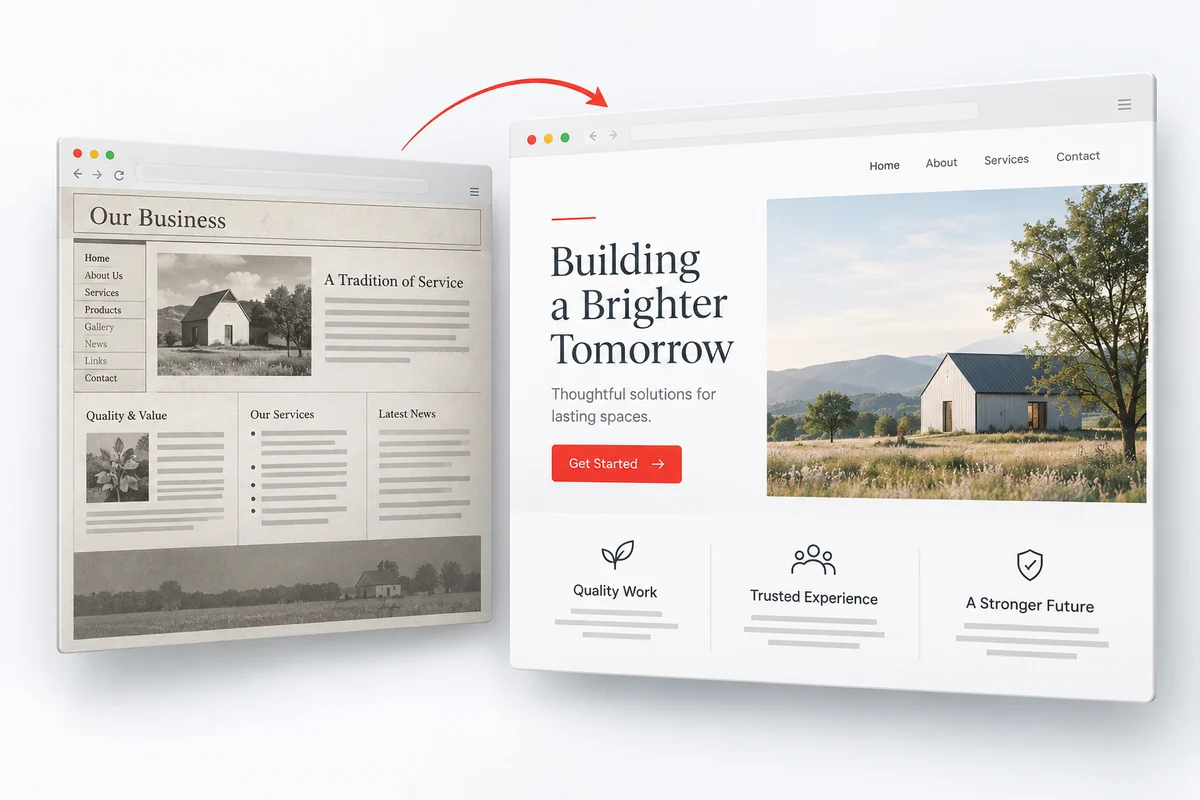
Concept illustration, not a completed client project.
PLAN THE REBUILD
A restoration brief and a design brief, together
Use the archive to recover useful material, then shape the site around the current business. Decide which pages should stay recognisable and where navigation, mobile presentation or messaging needs a new approach.
Define the visual direction
Share the preferred archive period, your essential content, brand assets, and examples of the design approach you want. Explain which elements should remain recognisable and which need to change. A redesign should serve the current business, not merely decorate missing content.
Preserve useful URL continuity
Historical page paths and valuable landing pages should be reviewed before reorganising the website. Keep meaningful paths where practical and plan redirects for approved changes. This supports continuity, but a redesign or restoration does not guarantee previous rankings or traffic.
Separate missing content from new work
Uncaptured assets may need to be supplied or recreated. New forms, integrations, or commerce functions require current configuration. Private databases and accounts cannot be reconstructed from the public archive. Agree these boundaries alongside the design brief.
Public archive evidence and recovery limits
Available captures determine the recovery evidence. Missing assets and original systems need your files, an agreed reconstruction or fresh configuration.
What the archive can provide
- Available historical copy and media
- Useful landing-page and URL references
- Evidence of the previous website structure
What needs another source or new work
- Content never captured or supplied
- Private databases and account records
- New functions outside the agreed design brief
Read the recovery scope before confirming essential pages and functions.
A CLEAR REBUILD PLAN
Recover, redesign and review
Select what matters
Identify content, pages and historical paths that still serve the business.
Define the new direction
Agree branding, design references, target platform and editing needs.
Recover and redesign
Use the available material in the approved refreshed layout.
Review the new website
Check content, navigation, responsive priorities and agreed handover details.
Choose what to retain before redesigning
Start with the pages, messaging, and historical URLs that still serve the business. Then identify what is outdated: the navigation, visual hierarchy, mobile layout, or conversion path. This avoids rebuilding an obsolete website simply because an old capture exists. Your current brand assets and business priorities should guide the new direction.
Combine recovered content with a clear design brief
Supply the preferred archive period, essential page list, current logo, approved copy changes, and design references. Explain whether the restored website should feel familiar or look substantially different. Agree the target platform and page-editing workflow as well as the visual direction, so the resulting website can be maintained after delivery.
QUESTIONS BEFORE YOU ORDER
Questions about redesign and recovery
Clarify the scope before ordering. Share the archive link and the requirements that matter to your project.
Faithful restoration aims to reconstruct the surviving appearance and content. Redesign uses useful archived material within an updated layout and structure. The choice affects the review process and design decisions, so discuss it before work begins. If only an editable recreation is required, compare the Elementor restoration service.
A redesign cannot recover information that was never captured. You may need to supply missing content or approve new copy and visuals. Replacement material should reflect the current business and must not be presented as historical evidence. Flag critical missing pages early so the project scope can account for them.
Review important URLs and their role before merging or moving content. Keep valuable page intent clear, retain useful paths where practical, and plan approved redirects where the structure changes. New headings and navigation should help visitors find the right service rather than placing unrelated keywords on every page.
The published service price is $299. Confirm the number of pages, design direction, output platform, recovered material, and any newly required functions for your specific project. A listed price is not a promise of unlimited pages, revisions, or integrations. Use the contact form to clarify the brief before ordering.
No, but changes should be deliberate. First identify the purpose of important pages and historical paths. Then agree the revised navigation and any approved URL changes, so a simpler design does not accidentally remove useful destinations.
Yes, when you provide approved logos, imagery and updated messaging within the agreed scope. Recovered content should be checked for outdated products, contact details and claims before it is reused in a modern design.
Bring your archived content into a new design.
Share what should stay, what needs to change and how you want to maintain the rebuilt site.
Share your domain, important pages, and preferred format. We can discuss the available material and the scope of your rebuild. For the range of output formats, explore our website restoration services.